Davide da Silva

Welcome to my personal website, where I share my ideas and projects.
Data Science and Computational Intelligence Researcher
Technical Skills: Python, SQL, Power BI, Excel, Git, Spark, Node.js, JavaScript, C, C++
Education
-
Ph.D., Informatic Engineering University of Coimbra - Portugal (Since September 2025) -
MBA, Data Science and Analytics University of São Paulo - Brazil (Since April 2024) -
MSc., Computer Science Pontifical Catholic University of Rio Grande do Sul - Brazil (April 2024) -
B.S., Computer Engineering Federal University of Santa Catarina - Brazil (May 2022)
Work Experience
Data Science and Analytics Independent Consultant (December 2023 - Present)
- Supervised and Unsupervised Machine Learning Model Development: Led the end-to-end development of machine learning models, focusing on both supervised and unsupervised techniques to uncover actionable insights and drive business decisions.
- ETL (Extract, Transform, Load): Designed and implemented robust ETL processes to extract data from diverse sources, transform it into a suitable format, and load it into data storage systems, ensuring data integrity and accessibility.
- Data Cleaning and Preprocessing: Implemented data cleaning and preprocessing pipelines to ensure high-quality input data for model training, including handling missing data, outlier detection, and feature engineering.
- Exploratory Data Analysis (EDA): Conducted thorough exploratory data analysis using Python libraries (pandas, numpy, matplotlib, seaborn, plotly) to uncover patterns, trends, and relationships in the data.
- Model Evaluation and Optimization: Utilized a range of evaluation metrics and techniques to assess model performance, including cross-validation, hyperparameter tuning, and ensemble methods to improve predictive accuracy.
- Visualization and Reporting: Created compelling visualizations and reports to communicate complex analytical findings to non-technical stakeholders, ensuring clear and actionable insights.
Web Systems Developer @ Khomp Indústria e Comércio ltda. (December 2021 - December 2023)
Responsibilities:
- Development of the Insight platform (SaaS), an analytics (BI) solution for telephony systems, offering historical and real-time performance data such as Network Effectiveness Ratio (NER), Answer Seizure Ratio (ASR), Average Call Duration (ACD), and Call Attempts Per Second (CAPS) for call centers, carriers, and companies with high call volumes. This solution significantly improved the operational efficiency of companies both nationally and internationally (Colombia, Chile, USA).
- Adaptation of the Insight platform for different time zones in countries such as Mexico, Colombia, and the USA, named “Insight Multiple Country.”
- Release and monitoring of new versions of the Insight product.
- Project management using Redmine.
- Creation and maintenance of reports.
- Software documentation and testing.
- Programming Languages and Tools Used:
- Python
- TypeScript
- Front-end: JavaScript, HTML, CSS, PUG/Jade, jQuery, D3.js
- Back-end: Node.js, PostgreSQL
- API Testing and Debugging: Insomnia and Postman
- Tools: Git (GitLab and GitHub), Docker, Kubernetes, Azure, Linux
Junior Web Systems Developer @ Empresa Júnior da Engenharia de Computação (EJEC-UFSC) - (September 2019 to December 2020)
- Experience as a Project Management Advisor, researching and implementing the Function Point Analysis (FPA) pricing technique to ensure precise product pricing, and training the team in its use.
- Experience as a web systems developer, utilizing languages and tools such as JavaScript, HTML, CSS, PostgreSQL, and React.
Listed projects
Using Principal Component Analysis (PCA), I developed a model to identify potential customers for bank loans. This method allowed for maximizing the conversion rate and reducing marketing costs. The project was carried out using Python and the libraries pandas, numpy, matplotlib, seaborn, plotly, and scikit-learn.
I analyzed and segmented credit card operator customers, identifying loyalty groups through Unsupervised Machine Learning techniques. Python was used for this project, along with the libraries pandas, numpy, matplotlib, seaborn, plotly, and scikit-learn.
I conducted a cluster analysis in retail, applying hierarchical methods and K-means to gain valuable marketing insights. This project utilized Python and the libraries pandas, numpy, matplotlib, seaborn, plotly, and scikit-learn.
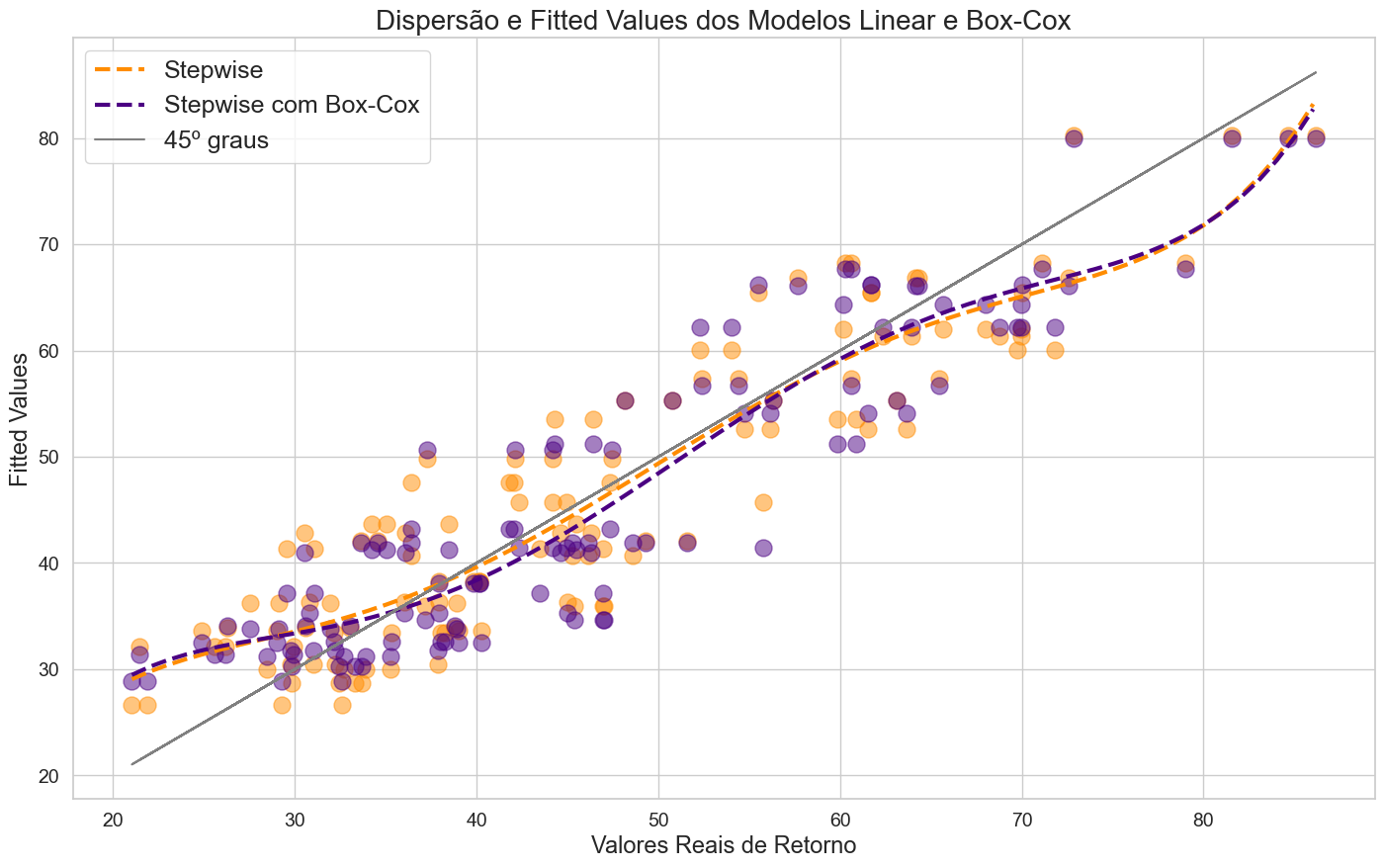
I developed a predictive model to forecast stock returns, employing multiple nonlinear regression. For this, I used Python and the libraries pandas, numpy, matplotlib, seaborn, plotly, statstests (stepwise, shapiro_francia), boxcox, statsmodels, and scikit-learn.
Publications
- Silva, D.C. et al. (2024). Exploring Foundation Models for Synthetic Medical Imaging: A Study on Chest X-Rays and Fine-Tuning Techniques. In: Workshop de Trabalhos em Andamento - Conference on Graphics, Patterns and Images (SIBGRAPI), 37. Porto Alegre: Sociedade Brasileira de Computação, pp. 94-98. https://doi.org/10.5753/sibgrapi.est.2024.31651